Phishing with AI
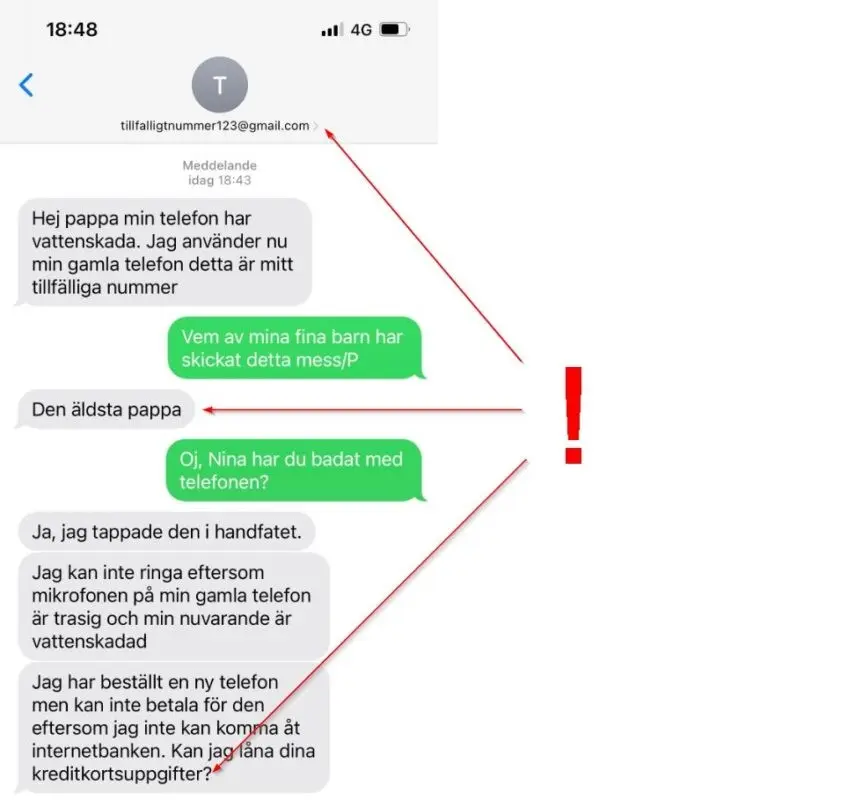
We're seeing that during 2023, fraud attempts via messages (SMS, chat and social media) have become more common in Sweden, where the scammer interacts with you, the recipient, in real time and tries to exploit your vulnerabilities, both technical and social, by pretending to be a family member, a close relative or a friend in trouble.
This is an extension of phishing, where the recipient is tricked into clicking a malicious link or handing over sensitive information. For a long time, fraud attempts were carried out broadly via email (spam) without any personal contact. These attempts were often easy to spot. Now they take place in a close, personal dialogue that is becoming increasingly difficult to distinguish from the genuine digital contact many people have with each other every day.
Such more advanced fraud attempts require resources and expertise — which no longer need to be manual. With the progress made in artificial intelligence (AI) in recent months, it's now easy to automate contact attempts and adapt the dialogue based on the recipient's reactions. We're seeing that this opens the door to fraud attempts becoming far more numerous and rapidly more sophisticated.
Tips if you suspect phishing:
- Stop.
- Think it through.
- Try to contact the sender via a different channel to verify that it really is who you think it is.
- Never share sensitive information such as credit card details or login codes. There are other ways to order or pay for things on behalf of loved ones.
- Don't send money via Swish to an unknown recipient.